


Shortly after receiving your request, one of our experts will contact you to discuss and clarify your business needs.
SaM Solutions at LogiMAT 2026: Logistics Moves From Experimentation to Full-Scale Execution
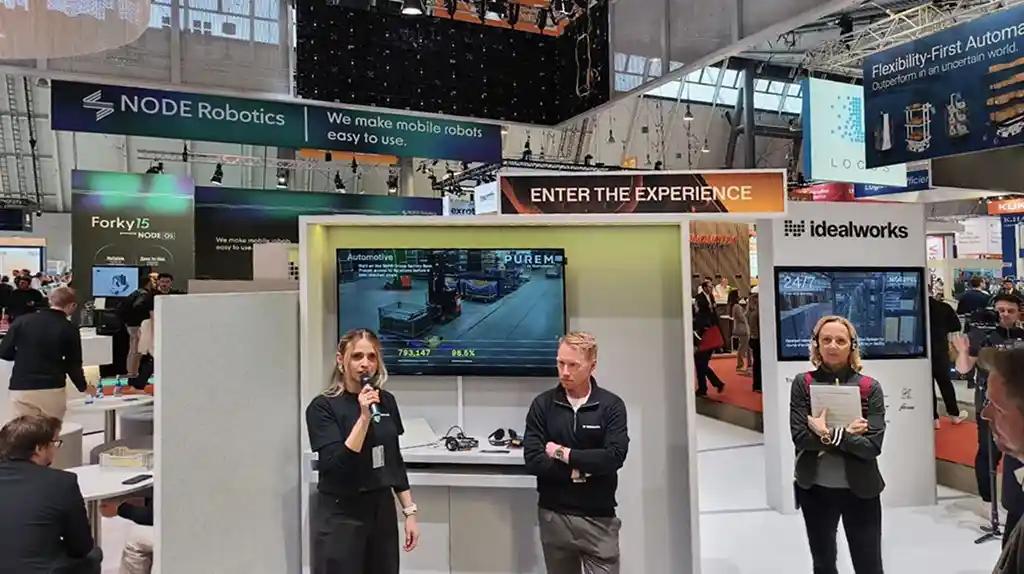
The SaM Solutions team attended LogiMAT Messe in Stuttgart, one of the most important international trade fairs for logistics and supply chain management. This year’s event clearly showed that the industry is entering a new phase — from testing technologies to deploying them at scale in real operations.
Across the exhibition, the focus shifted away from “what is possible” toward “what is already working in production”. Companies are now prioritizing stability, integration, and measurable results over experimentation.
Automation Becomes the Standard, Not an Advantage
One of the strongest trends at the event was the role of automation.
Compared to previous years, automation is no longer discussed as innovation — it is now a basic requirement for competitive operations.
Key direction:
- manual processes are rapidly being replaced
- automation is expected in all core logistics workflows
- performance is defined by speed, accuracy, and scalability
Integration Is the Core of Efficiency
Another major topic was system integration across logistics environments.
Instead of focusing on individual tools, companies are now building connected ecosystems.
What stands out:
- WMS, robotics, and data platforms must work together
- isolated systems are becoming less effective
- value is created through end-to-end connectivity
AI Moves Into Real Operations
Artificial intelligence was widely present at the event, but the focus has clearly changed.
Instead of demonstrations and pilot projects, companies are now applying AI in real operational environments.
Main points:
- AI supports decision-making in logistics processes
- focus shifts to measurable business outcomes
- AI becomes part of daily operations, not a separate tool
Conclusion
LogiMAT 2026 showed a clear direction for the logistics industry: the market is moving toward fully integrated, automated, and data-driven operations.
The key success factors are becoming:
- strong system integration
- wide adoption of automation
- practical use of AI in operations
Companies that focus on real implementation rather than experimentation are now setting the pace of the industry’s development.
Contact us
Prefer a more personal approach? Email us — we’ll get back to you shortly. Share your ideas or requirements, and we’ll help you refine them.
What happens next?
1
2
If needed, we’ll sign an NDA to ensure maximum confidentiality.
3
Your dedicated Account Manager will prepare a detailed project proposal, which may cover cost estimates, timelines, team CVs, and other relevant details.
4
Once approved, your project team can begin work within ten business days.