


Data storage
Developing a Scalable Linux-Based NAS Solution for Tandberg Data
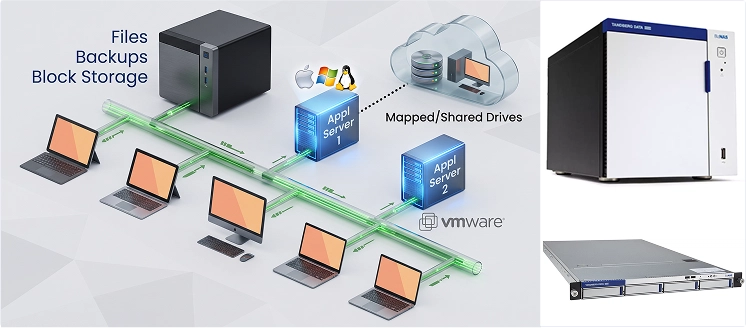
Tandberg Data partnered with SaM Solutions to develop its BizNAS storage solution under a tight deadline. SaM Solutions built a modular Debian-based software platform with embedded Linux, enterprise storage technologies, RDX backup, and an intuitive Admin GUI. The solution was delivered in just six months, 4.4× faster than the client's original estimate.


Tandberg Data needed to bring its new BizNAS network-attached storage line to market quickly to compete with established players such as Netgear, QNAP, Buffalo, and Synology. At the same time, the product requirements were evolving throughout development, with multiple hardware configurations ranging from 4-bay to 12-bay systems.
The project was technically complex, combining:
- Embedded Linux, the Linux kernel, and Intel Atom hardware;
- LVM, RAID, iSCSI, and network protocols;
- proprietary RDX technology;
- a web-based Admin GUI.
The solution also had to meet industrial-grade requirements for availability and data protection.
Another challenge was team coordination. The project involved nine dedicated teams across Asia, Europe, and North America, covering product ownership, development, and QA.
What SaM Solutions Proposed
- Rapid ramp-up in four weeks
Tandberg Data needed experienced engineers without the delays of in-house recruitment. SaM Solutions assembled and deployed a dedicated team of Linux, firmware, and GUI experts within just four weeks. - Deep embedded and systems expertise
The project required strong expertise in C/C++, Embedded Linux, kernel and driver development, as well as technologies such as LVM, mdadm, iSCSI, and networking. SaM Solutions provided the required expertise to develop a custom Debian-based system and integrate its key components. - Quality built into the development process
For a data storage solution, reliability was critical. SaM Solutions applied Test-Driven Development (TDD), a clearly defined Definition of Done, and an automated CI/CD pipeline with Jenkins, daily builds, and regression testing to identify issues early. - Agile delivery for changing requirements
The team worked in one-week sprints within six-week release cycles, allowing the project to adapt quickly as requirements evolved.
SaM Solutions developed a modular, Linux-based software stack built on Debian GNU/Linux. The solution managed both the storage system hardware – including Intel Atom, disk arrays, and USB 3.0 – and key end-user functionality.
Solution Architecture
Low-Level System and Firmware
- Development of a custom Linux kernel and initialization system.
- Integration of software RAID (mdadm), Logical Volume Management (LVM2), and AES-256 encryption.
- Implementation of a Dual DOM recovery system for automatic system recovery from a secondary memory chip in case of failure.
- Support for disk hot-swap and hot-spare functionality.
Modular Middleware
- Development of lightweight services using Ruby/Sinatra, Bash, Python, and Perl to connect low-level system tools with the user interface.
- Integration of key network protocols and services, including Samba/Winbind (SMB/CIFS), Netatalk (AFP), NFS, LIO (iSCSI Target), rsync, UPnP, Bonjour, and LDAP.
- Integration of backup to RDX® QuikStor™ cartridges, including automatic rollover to the next cartridge when the current one reaches capacity (Cartridge Spanning) and detection of offline disks.
Web-Based Administration and Ease of Use
- Development of a responsive web-based Admin GUI using AJAX/jQuery and Sinatra, designed for administrators with limited technical experience and based on the principle of “installation and setup in 15 minutes.”
- Built-in step-by-step configuration wizards, including a RAID Wizard.
- System health monitoring with SMART warnings, fan and temperature monitoring.
- Support for more than 10 languages and full integration with Microsoft Active Directory.
Implementation: Engineering and Processes
The project was built around structured engineering practices and a scalable workflow that enabled collaboration across nine distributed teams.
Rapid Team Ramp-Up
SaM Solutions assembled a dedicated project team within four weeks, including developers with expertise in C/C++, Ruby, Python, Bash, and the Linux kernel, as well as QA engineers.
The SaM Solutions team handled core software development, bug fixing, and unit testing, as well as manual and automated UI testing.
Agile Development and Release Cycles
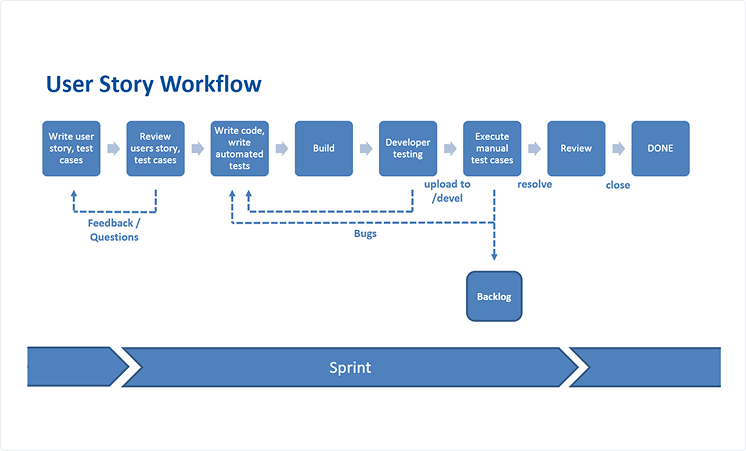
Development followed regular six-week release cycles:
- 4 weeks of development: Four one-week sprints, each ending with a fully functional product build.
- 2 weeks of regression and stabilization: Comprehensive testing, code freeze, and defect resolution ahead of the final release.
Quality and Test Automation
To prevent technical debt and critical defects from accumulating toward the final release, the team adopted a Test-Driven Development (TDD) approach.
Tests before code: Functionality was first defined through test cases and automated tests. Developers then implemented the product code against these tests.
“Done is Done” principle: A task or bug fix was not considered complete until:
- test cases had been written and validated;
- manual test scenarios had been successfully completed;
- all automated tests had passed without errors.
Continuous Integration and Automated Regression Testing
The team implemented an automated CI/CD workflow to maintain product quality throughout development:
- Daily builds were generated using Jenkins and pbuilder.
- An automated daily regression suite based on RSpec and Selenium ran every night.
- Any test failures were reviewed and addressed by developers as a priority the following morning.
This approach enabled the team to identify and resolve defects early, reducing the risk of critical issues reaching the final release.

Need to tackle a similar challenge?
Let’s talk about how we can support your next project
Other case studies



















Contact us
Prefer a more personal approach? Email us — we’ll get back to you shortly. Share your ideas or requirements, and we’ll help you refine them.
What happens next?
1
Shortly after receiving your request, one of our experts will contact you to discuss and clarify your business needs.
2
If needed, we’ll sign an NDA to ensure maximum confidentiality.
3
Your dedicated Account Manager will prepare a detailed project proposal, which may cover cost estimates, timelines, team CVs, and other relevant details.
4
Once approved, your project team can begin work within ten business days.