Spec-Driven Development with Claude Code: A Practical Guide


(Prefer videos? Watch a brief summary of this article below.)
Key Takeaways
- Spec-driven development gives Claude Code a persistent source of truth for requirements, constraints, architecture, edge cases, and acceptance criteria.
- A structured workflow connects specifications with implementation plans, tests, human review gates, and final verification.
- The approach improves predictability and traceability for complex projects, but specifications must remain accurate and proportionate to the task.
Claude Code can accelerate software delivery, but conversational prompts alone leave critical requirements open to interpretation. Spec-driven development addresses this problem by defining expected behavior, technical boundaries, and completion criteria before implementation begins. This guide explains how to prepare effective specifications, move from requirements to verified code, and scale the workflow across development teams.
What Is Spec-Driven Development with Claude Code?
Spec-driven development (SDD) with Claude Code is a structured workflow in which teams define what software must do before an AI agent begins implementation. The specification establishes requirements, constraints, architecture, acceptance criteria, and exclusions, while Claude Code explores the repository, prepares an implementation plan, writes the code, and verifies the result against those documented expectations. Unlike a conversational prompt, a specification remains available throughout the development cycle.

Specification as the source of truth
The specification becomes the source of truth when every design decision, code change, and test can be traced to an explicit requirement.
Consider a requirement to add rate limiting to a customer-facing API. “Add rate limiting” leaves Claude Code to choose the algorithm, scope, thresholds, storage mechanism, and error response. A stronger specification states that authenticated users may make 100 requests per minute, counters must be shared across application instances, exceeded limits must return HTTP 429 with a Retry-After header, and internal health-check endpoints are excluded. Claude Code can then convert each requirement into implementation tasks and tests instead of filling critical gaps with reasonable but unapproved assumptions.
The role of human review
In spec-driven development, human review is moved upstream from after-the-fact code review to explicit gatekeeping during design, planning, and pre-merge stages. When AI agents like Claude Code can generate hundreds of lines of code in seconds, traditional pull request reviews become serious operational bottlenecks and manual line-by-line inspection becomes impossible.
SDD restructures verification into three distinct human review gates:
| Verification gate | Artifact reviewed | Primary review objective |
|---|---|---|
| Gate 1: Design review | spec.md | Confirm functional requirements, edge cases, and scope boundaries before planning. |
| Gate 2: Plan review | PLAN.md | Verify task sequencing, target file isolations, and test strategies prior to coding. |
| Gate 3: Code audit | Full PR diff | Evaluate cold-read subagent review findings and test execution evidence before merging. |
DORA’s research on AI software delivery shows that companies that impose structured verification gates realize high throughput gains without the delivery instability that is associated with unstructured AI adoption.
Hence, senior developers should not look for syntax bugs in large diffs but should validate architectural specs before code execution starts.
Why Does Vibe Coding Fail on Complex Projects?
Vibe coding (the practice of feeding conversational prompts to AI agents instead of written design constraints) fails on enterprise applications because large language models must guess unstated technical requirements. The AI coding agent must infer missing requirements, and those individually plausible assumptions can accumulate into a system that works in isolated demonstrations but fails to satisfy the original business objective.
Ambiguous requirements
Ambiguous requirements force Claude Code to make product decisions that the project team has not consciously approved. A prompt can appear clear to its author while leaving several technically valid interpretations open to the coding agent.
For example, “allow administrators to export customer records” does not define which administrator roles qualify, which fields may leave the system, whether exports require audit logging, how large data sets are processed, or when generated files expire. Claude Code may implement a synchronous CSV download available to every administrator because that is a reasonable reading of the prompt. The business may have expected an asynchronous, encrypted export restricted to compliance officers and deleted after 24 hours. Both implementations satisfy the original sentence, but only one satisfies the actual operational and security requirements.
Architectural drift
It occurs when successive AI-generated changes remain locally reasonable but gradually violate the system’s intended design.
Suppose an ecommerce platform requires a new refund-notification feature. One session may add notification logic directly to the payment controller because that is the shortest route to a working result. A later session may place similar logic in the order service, while another introduces a queue for bulk refunds. Each feature can pass its own tests, yet the platform now contains three notification paths with different retry rules, observability, and failure handling. The immediate tasks are complete, but the architecture has become harder to operate and change.
Inconsistent implementation
Inconsistent implementation emerges when Claude Code receives different context, examples, or instructions across tasks. The resulting code may perform the requested functions while varying in naming, error handling, validation, testing depth, logging, API structure, or dependency choices.
A customer platform illustrates the operational cost. One generated endpoint might return errors as { “message”: “Not found” }, another as { “error”: { “code”: 404 } }, and a third as plain text. Front-end teams must then build separate handling logic, monitoring rules cannot classify failures reliably, and support staff receive inconsistent diagnostic information. The defect is not necessarily inside any single endpoint; it lies in the absence of a shared implementation contract.
How Does Spec Driven Development Differ from Plan Mode?
Claude Code’s plan mode controls when implementation begins, whereas spec-driven development governs the entire journey from requirements to verified software. Plan mode lets Claude Code examine a repository and propose changes without editing files until the user approves the plan; spec-driven development adds persistent requirements, review gates, traceability, and validation against an agreed source of truth.
Scope and persistence
Plan mode is designed for a specific coding task or session, while spec-driven development in Claude Code preserves the reasoning behind a feature throughout its lifecycle. An approved plan normally explains how to implement a change; a specification also records what the feature must achieve, why it is needed, which constraints apply, and what remains outside the scope.
Traceability across sessions
SDD connects requirements, implementation tasks, code changes, and tests even when work continues in a new Claude Code session. A developer can trace an authentication rule in the specification to a planned code change and then to the test that verifies it.
Plan mode alone can organize the next implementation step, but it does not automatically create this requirement-to-evidence chain.
Repeatability for teams
Spec-driven development gives teams a reusable process; plan mode depends on the prompt and context available in an individual session. So, SDD means consistency, which matters when several engineers use Claude Code: teams can evaluate work against the same documented standards instead of relying on each person to prompt, interpret, and review the tool in the same way.
How Do You Prepare an Effective Specification?
An effective specification implies that you give Claude Code enough information to implement the correct solution without inventing product decisions or violating technical boundaries.
Business goals and user scenarios
Business goals explain why the feature deserves to exist. User scenarios show who needs it and how it will be used.
Instead of asking Claude Code to “build a customer data export,” specify that the feature should reduce manual support requests and allow account owners to retrieve their data without staff assistance.
A representative scenario might state: “An authenticated account owner requests an export from the privacy settings page, receives a notification when it is ready, and downloads it within 24 hours.”
Functional requirements
Functional requirements define the observable behavior the software must provide. For the data-export feature, the specification should identify:
- Authorized roles
- Included records
- Supported formats
- Request limits
- Job statuses
- Notification behavior
- Download expiry
- Audit events
Each requirement should use language that can be tested: “The system must reject a second export request while another request is processing” is more useful than “The system should prevent unnecessary exports.”
Technical constraints
Technical constraints tell Claude Code which solution space is acceptable. A specification may require the export process to use the existing worker queue, store encrypted files in the approved object-storage service, preserve current public API contracts, and avoid introducing another third-party dependency.
Edge cases and acceptance criteria
- Edge cases describe conditions outside the ideal workflow.
- Acceptance criteria convert the specification into a pass-or-fail contract.
The data-export specification should cover large accounts, duplicate requests, deleted records, revoked permissions, interrupted jobs, unavailable storage, and expired download links. Acceptance criteria can then state measurable outcomes, for example, a user whose access is revoked before completion must not receive a valid download link, and a failed job must produce an audit event without exposing partial data.
How Does CLAUDE.md Support Spec-Driven Development?
CLAUDE.md is the persistent memory and steering layer for Claude Code. It automatically loads repository-specific instructions into context at the start of every terminal session. CLAUDE.md establishes project conventions, repository structures and verification commands in version control to prevent context drift and steer AI agent execution in accordance with enterprise engineering standards.
Project instructions and conventions
CLAUDE.md applies coding standards, naming rules, and hard negative constraints at the project level, directly in Claude Code terminal sessions. Without guidance, natural language LLMs tend to fall back to generic code patterns, but enterprise repositories require strict adherence to governance policies.
Repository architecture
Claude Code instantly maps target modules, interfaces, and test directories saving context tokens on exploratory file searches due to indexing repository layout within CLAUDE.md. In large multi-package monorepos or legacy microservices, unguided AI agents waste context window capacity scanning directories that don’t need scanning.
Build and testing commands
With defined explicit build, linting, and test execution scripts in CLAUDE.md, Claude Code runs automated verification loops and self-correct failing builds before requesting human code review. Spec-driven development requires deterministic proof of working software rather than relying on unverified model assertions.
Instruction scope and maintenance
If you keep CLAUDE.md concise (ideally under 200 lines) and delegate deep feature instructions to lazy-loaded .claude/rules/ files, it prevents context window degradation and maintains strict instruction adherence. During the expansion of enterprise software projects, bloated instruction files dilute model attention, causing Claude Code to skip advisory rules during long coding sessions.
How Does the Workflow Move from Specification to Implementation?
The workflow moves through six controlled stages: repository exploration, requirement clarification, specification writing, technical planning, implementation with testing, and final diff review.
Step 1: Explore the repository
Claude Code should first examine the repository without editing it. The exploration should identify relevant modules, dependencies, interfaces, data models, tests, architectural patterns, and instructions in CLAUDE.md.
Step 2: Clarify the requirements
The team should resolve ambiguous requirements before Claude Code creates the specification. Questions should address users, business outcomes, permissions, workflows, data ownership, failure behavior, exclusions, and measurable success.
Step 3: Create the specification
The specification should translate the clarified requirements into a self-contained, reviewable contract. It should document business goals, user scenarios, functional behavior, technical constraints, edge cases, acceptance criteria, and out-of-scope work.
Step 4: Generate the technical plan
Claude Code should convert the approved specification into an ordered implementation plan. The plan should name the files and interfaces to modify, describe data flows and migrations, identify dependencies, define tests, and finish with an end-to-end verification step.
Step 5: Implement and test
Claude Code should implement the approved plan in small, testable increments and verify each meaningful change before continuing. Unit, integration, contract, security, and end-to-end tests should be selected according to the feature’s risk profile.
Step 6: Review the final diff
The final review should compare the complete diff with the specification and technical plan. A human reviewer or fresh-context Claude Code reviewer should check that every requirement is implemented, edge cases have tests, architectural boundaries remain intact, and no unrelated changes entered the scope.
How Can Tests, Hooks, and Agents Enforce the Specification?
Tests, hooks, and specialized agents turn a written specification into repeatable checks throughout development. Tests verify expected behavior, hooks provide the automation of selected controls, and agents divide implementation and review into focused responsibilities.
- Requirements-to-test mapping. Each test should reference a specific requirement or acceptance criterion, creating a visible link between the specification and executable evidence. This mapping helps reviewers detect unimplemented requirements and not only rely on broad coverage percentages.
- Automated validation. Hooks can automatically run tests, linters, type checks, security scanners, or policy scripts before Claude Code completes an action or finishes a task. Unlike instructions in CLAUDE.md, which guide model behavior, hooks execute deterministic controls and can block progress when a required check fails.
- Task decomposition. Agents can divide an approved plan into bounded tasks with explicit inputs, outputs, dependencies, and acceptance criteria. One agent might implement a database migration while another prepares API contract tests in an isolated worktree. Decomposition reduces context pressure and makes each result easier to compare with the relevant part of the specification, although shared interfaces should be agreed before parallel work begins.
- Independent verification. A separate agent should review the final diff against the specification without inheriting the implementer’s reasoning. The reviewer can identify missing requirements, untested edge cases, architectural violations, and unrelated changes, then return concrete findings for correction. Human approval should remain the final gate for material business, security, and release decisions.
Which Frameworks Can Extend Claude Code?
Open-source frameworks like Superpowers, GitHub Spec Kit, and BMAD Method add specialized capabilities to Claude Code.
Superpowers
Superpowers is a plugin-based skills framework that automatically hooks into Claude Code at session start to enforce software development discipline. Rather than executing ad-hoc prompts, Superpowers guides the agent through explicit skill phases, e.g., mandatory architectural brainstorming, git worktree isolation, and Test-Driven Development (TDD) loops. It dispatches dedicated subagents to run a two-stage code review (spec compliance followed by code quality) for every task before merging changes, ensuring unverified code never hits the main branch.
GitHub Spec Kit
GitHub Spec Kit provides an artifact-driven workflow built around a project constitution, feature specification, technical plan, task list, implementation, and convergence review. Its commands deliberately separate what and why to build from technology and architecture decisions, creating a traceable path from requirements to code.
BMAD Method
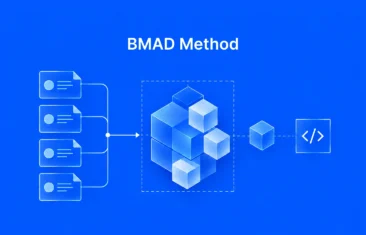
BMAD Method applies an adaptive, role-oriented process to AI-assisted development. The framework preserves product and technical decisions as durable context and can introduce specialized product, architecture, UX, development, and testing perspectives when project complexity requires them. Smaller changes can move directly toward implementation, while larger initiatives receive deeper discovery and planning.
Choosing the right framework
Selecting the appropriate framework depends on team size, process rigor, and the level of autonomy required for your development workflow.
| Framework | Primary focus | Best used for | Key advantage |
|---|---|---|---|
| Superpowers | TDD and subagent auditing | Individual devs and small teams | Automated session hooks and strict two-stage subagent code reviews |
| GitHub Spec Kit | Governance and artifact standards | Multi-developer teams and enterprise repos | Standardized slash-command pipeline anchored by repository constitutions |
| BMAD Method | Agile workflows and persona agents | Large codebases and end-to-end epics | Specialized agent roles (Product, Arch, QA) and unattended loop execution |
- Use Superpowers if you want seamless, terminal-native TDD and automated subagent code reviews without altering your repository structure.
- Use GitHub Spec Kit if you require strict, standardized Markdown templates (spec.md, plan.md) and command-line gates across cross-functional engineering teams.
- Use BMAD Method if you are managing complex, multi-epic features that require architectural modeling, dedicated QA roles, and extended autonomous execution.
What Are the Benefits and Limitations of Claude Code Spec-Driven Development?
Spec-driven development makes Claude Code more predictable, as it replaces implicit expectations with persistent requirements, review gates, and verification criteria. The trade-off is additional planning and maintenance: specifications can become outdated, long sessions can exhaust useful context, and excessive process can slow down simple changes.
Predictability and traceability
An approved specification gives Claude Code and human reviewers the same definition of success. Requirements can be traced through the technical plan to code changes, tests, and release evidence, making omissions and unapproved scope easier to identify. This traceability is particularly valuable for multi-file features, regulated systems, and work that continues across several sessions. However, the specification improves consistency rather than guaranteeing it; executable tests and human approval must still enforce critical requirements.
Faster review cycles
Specification-driven reviews can be faster because reviewers assess the diff against explicit requirements instead of reconstructing intent from code and conversation history.
Specification drift
Specification drift occurs when implementation decisions change but the written requirements, architecture, or acceptance criteria do not. The code may then pass its tests while no longer matching the document that reviewers treat as authoritative. Teams can reduce drift by updating the specification in the same pull request as the implementation, mapping requirements to tests, and asking an independent reviewer to compare the final diff with the approved artifacts. Claude Code assists with this comparison, but it does not replace ownership of the specification.
Context exhaustion
Long Claude Code sessions can lose effectiveness as conversations, file contents, and command output fill the context window. Anthropic states that performance may deteriorate as context grows and that earlier instructions can receive less attention. Persistent specifications mitigate this risk by allowing implementation to continue in a clean session with the important decisions stored outside the conversation.
Maintenance overhead
Specifications create value only while they remain accurate, concise, and proportionate to the work. Teams must review requirements, update architectural decisions, maintain acceptance criteria, and remove obsolete instructions, which adds effort before and during implementation. A full specification is therefore unnecessary for a typo, isolated rename, or other low-risk change with an obvious result.
How Can Teams Adopt and Scale the Workflow?
Teams should introduce Claude Code spec-driven development through a controlled pilot, then scale the practices that produce better delivery outcomes. Shared templates, clear ownership, quality metrics, and mandatory synchronization between specifications and code turn an individual technique into a repeatable organizational workflow.
- Start with a pilot project: Choose one representative project with meaningful complexity, measurable outcomes, and manageable delivery risk. A multi-file feature with clear users and acceptance criteria is more informative than a trivial bug fix or business-critical migration.
- Create shared templates: They give you a consistent starting point for specifications, technical plans, task lists, and review checklists. A specification template should cover business goals, user scenarios, functional requirements, constraints, edge cases, exclusions, and acceptance criteria without forcing every project into the same level of detail.
- Establish governance: Governance should define who authors, approves, changes, and verifies each specification. Product owners may approve business behavior, architects may own system boundaries, security specialists may review sensitive workflows, and engineering leads may authorize implementation.
- Measure delivery quality: Compare pilot results with similar work completed under the existing process. The workflow should scale only when it improves outcomes without adding disproportionate planning and review effort.
- Keep specifications and implementations aligned: Specification updates should accompany implementation changes in the same pull request whenever product behavior, architecture, or acceptance criteria evolve. Reviewers should compare the final diff, tests, and documentation with the approved specification before release.
Summing Up
Spec-driven development using Claude Code turns informal requests into a controlled workflow built around explicit requirements, technical plans, testing, and review. It helps teams reduce ambiguity, limit architectural drift, and evaluate generated code against measurable acceptance criteria. The approach delivers the greatest value on complex or high-risk projects where predictability and traceability justify the additional planning effort.
FAQ
How much does Claude Code cost for software engineering teams?
Claude Code is included with Team seats: Standard costs $20 per user/month when billed annually (or $25 month-to-month); Premium costs $100 per user/month when billed annually (or $125 month-to-month) and provides five times more usage. Enterprise starts at $20 per user/month plus model usage billed at API rates; tailored plans require a sales quote.
Which programming languages does Claude Code support?
How does Claude Code handle source data privacy?
Which IDEs and operating systems support Claude Code?