AI in SaaS: How Artificial Intelligence Is Transforming Software as a Service


(If you prefer video content, please watch the concise video summary of this article below)
Main Takeaways:
- AI in SaaS isn’t a chatbot. It covers everything: from recommendations to text generation and fraud detection.
- Core technologies behind SaaS platforms: ML, NLP, generative models, intelligent automation, and predictive analytics.
- Benefits of AI in software as a service: reduction of manual labor, improved service quality, and speed of decision-making.
- Challenges of SaaS and artificial intelligence: data privacy and security risks, model bias, integrations with legacy systems, and talent shortage.
- It’s important to choose a partner who can build a resilient system.
If you are building a product using the SaaS model (or buying such products), the main question now sounds different. It is no longer “should we add AI,” but “where exactly will AI deliver a measurable impact, and how do we ensure we don’t lose user trust?”
This article is exactly about that. In simple terms. With numbers.
What Is AI in SaaS?
To avoid confusion, let’s establish a baseline.
SaaS, as defined by NIST, is a model where the consumer is given the capability to use the provider’s applications running on a cloud infrastructure, usually accessible via a web browser or an API.
AI in SaaS is a scenario where intelligence is built directly into the product and influences how the product
- understands data,
- draws conclusions (inference),
- proposes solutions,
- automatically performs actions,
- and learns from feedback.
Important: AI in SaaS isn’t just a “chatbot.” It spans the entire spectrum: from recommendations and prediction to automated ticket classification, text generation, and fraud detection.
AI unfolds particularly fast in SaaS development for two main reasons:
- First, SaaS inherently “lives” in the cloud. This allows for rapid update rollouts, centralized models, a unified pipeline for improvements, and the ability to scale computing power as needs grow.
- Second, SaaS usually already holds the “context”: CRM data, interaction histories, product events, logs, documents, and payments. Without context, AI almost always devolves into an expensive toy.
Why AI Is Reshaping SaaS Business Models
AI changes SaaS not only technically. It changes how SaaS makes money and what clients are willing to pay for.


Core AI Technologies Powering SaaS Platforms
In SaaS, developers most frequently encounter the same set of AI building blocks. They might go by different names, but they are architecturally similar.
Below is a table that helps categorize the technologies, data, and typical values.
This structure aligns perfectly with MLOps practices and with how SaaS providers describe their AI platforms: production-quality monitoring, repeatable pipelines, risk controls, and model-output security.
| Technology | What does it do in SaaS? | What databases do you usually need? | What to keep in mind in the production phase? |
| Machine learning | Classification, recommendation, scoring, patterns search | User actions history, CRM, transactions, product logs | Quality monitoring, drift, MLOps processes for model upgrade |
| Natural language processing | Text understanding, routing, entity extraction, sentiment analysis | Tickets, chats, letters, knowledge bases | Data confidentiality, filtration, and protection from prompt injection |
| Predictive analytics | Demand forecasts, financial forecasts | Time series, usage metrics, sales, finances | Correct validation, seasonality, and explainability for business |
| Generative models | Generation of the code, text, CV, content, scenarios | Text knowledge bases, documentation, content, system context | Grounding, RAG, hallucinationscontrol |
| Intelligent automation | Automatic execution of actions in systems | Event-data + integration rules, access policies | Rights control, audit, and human confirmation at critical steps |
Machine Learning in SaaS usually works “in the background.” And that is normal. The user might not even realize that a model already has:
- calculated churn probability,
- suggested the next best action,
- determined lead priority,
- or ranked search results.
Three things are especially critical here: datasets, inference quality control, and regular checks to ensure the model hasn’t “drifted.” MLOps documentation strongly emphasizes the necessity of production model monitoring and retraining iterations upon degradation.
NLP in SaaS is currently experiencing a renaissance because LLMs have been added to classic tasks. But the risks have grown too. The simplest example: prompt injection. OWASP explicitly highlights prompt injection as a top risk for LLM applications, alongside insecure output handling and other vulnerability classes. Therefore, “NLP in SaaS” isn’t just about “generating a beautifully written response.” It’s about how to safely process a request, prevent data leaks, avoid executing malicious commands, and filter the output.
Predictive analytics is particularly valuable for SaaS in areas driven by numbers: sales, finance, logistics, and manufacturing. The crucial point here is that the forecast itself doesn’t sell. The action triggered by the forecast sells. A prime example: Gartner projected that embedded AI in cloud ERP could lead to a faster financial close (a press release estimated a “30% faster financial close” by 2028). The value isn’t in the chart; the value is in the transformation of the process.
Generative models shine brightest in SaaS areas rich in text and context:
- customer support,
- knowledge bases,
- marketing,
- documentation,
- internal team communication.
But the most critical question has arisen: “Can we trust the answer?” A practical architectural response to this is the RAG (retrieval-augmented generation) approach, where the model doesn’t just “invent from thin air,” but first retrieves relevant fragments from your sources before generating an answer.
Today, the conversation is shifting from basic automation to “intelligent automation.” The difference is simple: in classic automation, you hardcode the rules in advance. In intelligent automation, the system can:
- recognize the situation itself,
- select the appropriate action,
- and execute it across connected systems via integration. This leads us directly to agents and the “AI-first” competitive landscape.
Get AI software built for your business by SaM Solutions — and start seeing results.
Key Features of AI-Driven SaaS Applications
Let’s look at the product “symptoms” of a solid AI-SaaS. These are the things the user feels — and why they choose to stay, expand their contract, and recommend the product.
Strategic benefits of AI in SaaS
Strategically, AI gives SaaS companies three powerful advantages:
- Speed of decision-making.
- Reduction of manual labor.
- Improved service quality.
All of these can be packaged into metrics. But there is a catch: AI must be embedded directly into the workflow. Otherwise, users will just “play around” and go back to their usual buttons.
Hyper-personalization at scale
In the past, personalization in SaaS was mostly just segmentation: “show X to all users on this pricing tier.” AI enables hyper-personalization, where the product adapts to the behavior of a specific user and the context of their account. This could mean:
- personalized tooltips,
- personalized workflows,
- personalized recommendations,
- personalized copy. This is why many platforms emphasize that their AI works “with your data” and “within your context,” rather than acting as a generic chatbot.
Advanced customer engagement
Engagement is no longer reduced to email blasts and chat widgets. AI helps build engagement as a continuous system:
- anticipating the moment a user gets stuck,
- offering assistance before a ticket is filed,
- and collecting feedback frictionlessly (“reply with one click”).
Predictive decision-making
Predictive decision-making means the product doesn’t just show a report; it helps you decide. For example:
- “Which clients are on the verge of churning?”
- “Which deals are at risk of stalling?”
- “Where is the funnel breaking down?”
- “Which product tweak will drive growth?” In SaaS, this is usually implemented as a combination of analytics + ML + clear UI recommendations.
Intelligent security and fraud detection
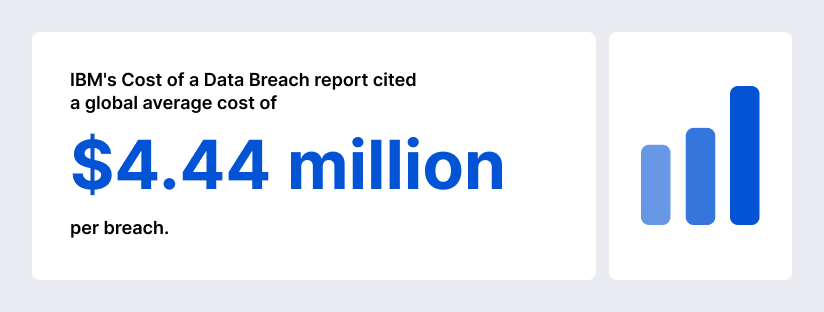
As AI grows, the cost of errors rises. Plus, threats multiply: new channels, new integrations, new attack vectors. On one hand, AI bolsters security by detecting anomalies, accelerating triage, and responding faster. On the other hand, it introduces new risks. The OWASP Top 10 for LLMs explicitly lists threats like prompt injection and insecure output handling. And the cost of incidents remains high: IBM’s Cost of a Data Breach report cited a global average cost of $4.44 million per breach (with higher figures for specific regions). Therefore, “intelligence” in SaaS must be paired with access controls, auditing, and transparent data policies.
Automated customer support
Support has become one of the most obvious areas for quick AI wins. The reason is simple: lots of repetitive questions, lots of text, and usually an existing knowledge base. Modern solutions explicitly outline use cases like the following:
- automated ticket summaries,
- drafting responses,
- intelligent routing,
- advanced self-service. The crucial goal here is not to “replace people,” but to eliminate routine tasks so the team can focus on complex cases. Even in Copilot studies, users reported increased productivity and reduced cognitive overload.
Operational scalability
From a SaaS perspective, scalability isn’t just about “handling traffic.” It’s about maintaining service quality as the client grows. By definition, the cloud must support rapid resource provisioning and release, alongside properties like rapid elasticity — a core part of the NIST cloud definition. AI adds another layer to this: computational overhead. Therefore, “operational scalability” now equals infrastructure + data + model + monitoring.
Continuous product innovation
Roadmaps used to be updated by releases. Now they are updated by data. AI enables a rapid cycle:
- you ship a feature,
- monitor usage,
- train the model,
- improve the experience,
- measure again. This is true continuous innovation, but only if you know how to measure and iterate, rather than just “slapping an LLM on it.”
AI Use Cases Across SaaS Functions
To avoid getting lost in abstraction, it is useful to view AI as a set of SaaS business functions. Marketing, sales, product, finance, etc.
Here is a practical table you can use as a checklist:
These use cases closely mirror how markets describe AI growth, both in spending reports (IDC) and functional adoption reviews (McKinsey).
| Function in a SaaS company | AI use cases | Data | What to measure (KPI) | Quick start |
| Marketing optimization | Content generation, segmentation, predictive audiences | CRM, web analytics, campaigns | CAC, conversion rate, content production speed | Start with generation and testing, then add prediction |
| Sales intelligence | Lead scoring, sales rep guidance, and auto meeting summaries | CRM, calls, emails | Win rate, cycle time, forecast accuracy | Embed into CRM so it “lives” in the workflow |
| Customer success automation | Early churn detection, personalized playbooks | Usage metrics, tickets, NPS | Churn, expansion, time-to-value | Build a health score and action scenarios |
| Product development acceleration | Feedback analysis, user story generation, and dev assistance | Reviews, tickets, logs | Discovery speed, solution quality | Start with text analysis and topic clustering |
| Financial forecasting | Revenue forecasting, faster period close | Billing, sales, expenses | Forecast accuracy, close speed | Connect AI to ERP/financial systems with controls |
| HR and talent management | Recruiting, training, and internal assistants | ATS, LMS, HRIS | Time-to-hire, retention, training effectiveness | Focus on knowledge and answer retrieval |
| Workflow automation | Agent-based workflows, triggers, and task orchestration | Events, rules, integrations | Cycle time, SLA, errors | Start with a narrow process and clear access control |
Industry Applications of AI SaaS Solutions
The exact same technologies yield wildly different results across industries, driven by differing data, differing risks, and a differing cost of failure.
- Retail: AI-SaaS revolves around recommendations, demand forecasting, inventory optimization, and personalized offers. Quick, measurable ROI is critical; retail hates “lengthy experiments.”
- Financial services: Early adopters, but with strict security and regulatory requirements. Monitoring, access control, auditing, and formal risk management are paramount.
- Manufacturing: AI is increasingly tied to IoT and predictive maintenance. For SaaS specifically, it involves planning, supply chain management, quality control, and process optimization.
- Healthcare: The stakes are highest here: sensitive data, strict regulations, and costly errors. AI-SaaS is built with a heavy emphasis on privacy, data minimization, and “human-in-the-loop” safeguards.
- Enterprise IT: AI is embedded into ITSM, monitoring, incident management, knowledge bases, and process automation. The trend toward “workflow + AI platforms” is particularly visible here.
- Media and entertainment: The generative layer is exploding here (content generation/adaptation, localization, summarization, audience analysis). However, rights and quality risks are high, requiring editorial guardrails.
How AI Is Changing SaaS Competition
Competition in SaaS is evolving incredibly fast. Interestingly, it’s not just the products changing, but customer expectations: “Why doesn’t your software understand what I need instantly?”
Real-world examples of AI-powered SaaS companies
To grasp this reality, look at how major SaaS platforms brand and embed AI right into their products:


Why are these examples important? Because they set the new baseline expectation. AI is becoming a “must-have,” not a “nice-to-have.”
Shift to AI-first products
An AI-first product doesn’t just “add a chat.” It is a product where:
- AI is embedded into core user scenarios,
- The UI changes (fewer clicks, more natural language commands),
- Value is proven through actions, not just flashy demos.
This is exactly why Gartner explicitly warned against “agentwashing” — labeling basic assistants as “agents” when they lack true autonomy. The market is maturing, and so are the buyers.
New competitive advantages
In the AI-SaaS era, competitive moats look like this:
- Context: If your product “knows the client” via deep CRM/data ties, its AI outputs will be vastly superior.
- Workflow integration speed: Research consistently shows that the real winners are those who transform processes, rather than just bolting on a new tool.
- Security and trust: This is now a core product feature, not just a legal addendum.
- Economics: New pricing models where the client sees a direct link between “money paid” and “results achieved.”
Changing customer expectations
Clients demand several things simultaneously: speed and convenience, a guarantee that their data won’t leak into someone else’s model, and an AI that doesn’t hallucinate with total confidence. This drives stringent data policy demands. For instance, OpenAI emphasizes in its API documentation and enterprise privacy pages that data sent via API is, by default, not used to train models (unless the client explicitly opts in). Regardless of the vendor, the baseline standard has become: “prove my data is safe.
Organizational Changes in AI-Driven SaaS Companies
Let’s have a look at the organizational changes in AI-driven SaaS companies: new skill requirements, cross-functional AI teams, AI governance, and ethics.
New skill requirements
Almost everything in AI-SaaS eventually comes down to people. You need more talent that understands data, models, and risks. Simultaneously, baseline AI literacy is required across the entire organization — from product managers to support reps. The World Economic Forum highlights the amplifying role of tech skills and the surging demand for AI and data-related roles.
Cross-functional AI teams
Successful AI features are rarely built in silos. You must connect:
- Product (what we build)
- Engineering (how we build it)
- Data Science (what we train on)
- Security (how we protect it)
- Legal/Compliance (what is permissible)
- Support (how it impacts the client)
AI governance and ethics
Governance isn’t just bureaucratic box-checking; it’s how you maintain trust. NIST released the AI Risk Management Framework (AI RMF), a voluntary guide focusing on trustworthiness, risk assessment, and system lifecycle management. In SaaS, this practically means:
- strict data policies,
- use-case specific risk assessments,
- human-in-the-loop requirements where failure costs are high,
- and observability — monitoring not just uptime, but “model behavior.”
Challenges and Risks of AI in SaaS
There are benefits, and there are, of course, challenges and risks of using AI in SaaS. Let’s have a look at the latter now.
Data privacy and security risks
The number one risk in AI-SaaS is simple: “We sent the wrong data to the wrong place.” This is especially critical for generative workflows where prompts might inadvertently include PII, trade secrets, or internal documents. Furthermore, LLMs introduce specific vulnerabilities like prompt injection and insecure output handling (OWASP). And as IBM notes, data breaches remain incredibly costly (global average $4.44M).
Model bias and transparency issues
When models influence decisions (scoring, moderation, recommendations), bias risks emerge. So does the “black box” risk. If the business cannot explain why the AI made a decision, users will resist it. Thus, transparency, testing, and monitoring are vital product features, not just backend data chores.
Integration with legacy systems
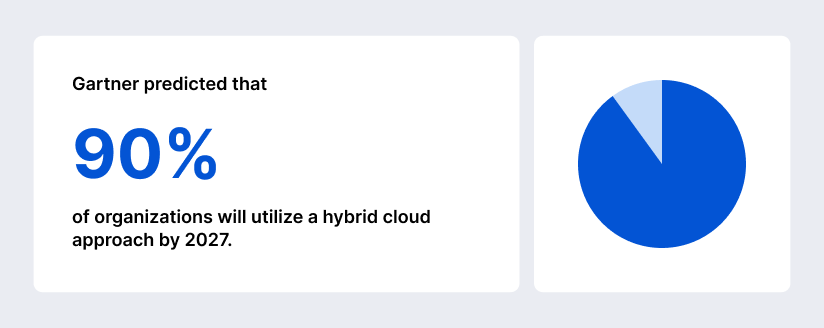
Surprise: even the most powerful AI is useless if it can’t reach your actual operational systems. SaaS AI almost always demands integration with CRMs, ERPs, databases, BI tools, and document workflows. Gartner predicted that 90% of organizations will utilize a hybrid cloud approach by 2027, highlighting data synchronization in hybrid environments as a critical, pressing challenge.
Talent shortage
AI talent is rare and expensive. And you don’t just need ML engineers. You need product managers who intuitively grasp where to insert AI. You need engineers skilled in MLOps. You need security specialists. LinkedIn data points to a massive overhaul in required skill sets by 2030, with AI acting as the primary catalyst.
Regulatory pressure
AI regulation is no longer a “someday” problem. In Europe, the cornerstone is the EU AI Act. Official European Commission resources outline a phased enforcement calendar, with the bulk of the regulations taking effect in 2026. This means SaaS companies must proactively determine:
- their legal role (provider, deployer, etc.),
- the risk classification of their use cases,
- documentation requirements,
- and controls/transparency mandates.
How SaaS Companies Can Successfully Implement AI
There are many ways to implement AI, but successful projects almost always follow a specific “human-centric” route: value first, data second, scaling third.
This includes a reliable data layer, model deployment/monitoring tools, secure integrations, and scalable computing. Google Cloud MLOps materials stress production model monitoring and retraining, while AWS outlines pipelines covering data prep, training, evaluation, and registration prior to deployment.
If the team doesn’t understand AI, they will fear it or use it chaotically. Workplace learning reports indicate a massive surge in AI training internally.
AI must live in the primary workflows, safely utilizing actual business context.
Today, the conversation is shifting from basic automation to “intelligent automation.” The difference is simple: in classic automation, you hardcode the rules in advance. In intelligent automation, the system can:
- recognize the situation itself,
- select the appropriate action,
- and execute it across connected systems via integration. This leads us directly to agents and the “AI-first” competitive landscape.
Start with small hypotheses, measure rapidly, and establish clear criteria for what makes it to production.
Track Business metrics (conversion, churn, close speed) alongside Technical metrics (model accuracy, latency, inference costs, incidents). Cost optimization is vital — it’s very easy to burn through a budget via expensive API calls.
The Future of AI in SaaS
The future of AI in SaaS can be summed up in one word: “action.” If AI used to answer, it will soon execute.
- Generative AI in SaaS platforms: Gen AI will permeate anything involving text, knowledge, and communication. It’s shifting from generic chatbots to highly specialized tools for sales, support, and finance.
- Rise of agentic systems: The next frontier where AI autonomously completes tasks across systems. Gartner predicted a massive surge in enterprise apps featuring task-specific agents by 2026, though analysts caution against overhyping tools that lack true autonomy.
- AI and IoT convergence: AI will increasingly process real-world signals (sensors, hardware, smart supply chains).
- Autonomous business processes: Routine operations will be handled with zero human intervention, supported by robust auditing.
What Does SaM Solutions Offer?
If you are at the “we want AI, but need to do it right” stage, it is crucial to choose a partner who knows how to build a resilient system (data, integrations, security, scaling), not just how to “plug in an API.”
For areas critical to SaaS AI, SaM Solutions excels in:
- Cloud application development, including SaaS products and cloud-native architectures (microservices, serverless).
- AI software development services, including LLM integration, AI agent development, and modern system integration protocols.
- Practical architecture implementation, such as utilizing RAG to ground generative AI securely in a company’s real, proprietary knowledge.
In 2026, clients are not buying an “AI feature” — they are buying the assurance that it is safe, scalable, and delivers measurable value.
Conclusion
AI in SaaS is not a fad. It is the new “operating system” for the software we use daily. We already see the market growth and rapid adoption rates. SaaS remains the dominant cloud segment. Companies are migrating from passive assistants to active agents. And as capabilities grow, so does the critical need for governance, security, MLOps, and provable ROI.
The most practical advice is simple: start with a single use case that genuinely saves time or makes money. Prepare the data for it. Set up the monitoring for it. And only then scale. This is how AI stops being a novelty and becomes a core pillar of your product and your competitive advantage.
FAQ
How much does it cost to integrate AI into a SaaS product?
It is better to calculate costs not as a single number but across four buckets:
- Data
- Model and inference
- Integrations and automation
- Security and compliance
What programming languages are best for building AI-powered SaaS solutions?
How long does it take to implement AI features in SaaS products?