LLM Multi-Agent Architecture: The Future of AI Collaboration


(If you prefer video content, please watch the concise video summary of this article below)
LLM multi-agent architecture refers to AI systems where multiple large language model (LLM) based agents work together collaboratively as a team. It matters because this multi-agent architecture LLM approach can tackle complex tasks more efficiently than any single model – boosting overall scalability, specialization, and dynamic problem-solving in AI solutions.
What Is a Multi-Agent LLM System?
A multi-agent LLM system is essentially a team of AI agents (each powered by an LLM) that cooperate to accomplish a shared goal. Think of it as a generative AI “dream team” where each LLM unit has a unique area of expertise, and together they execute tasks by coordinating their actions. In this kind of multi LLM architecture, one agent might specialize in data analysis, another in generating creative text, and another in fact-checking for accuracy. Each unit handles its portion of the job while communicating with others to make collective decisions. By sharing information and collaborating, these units combine their strengths to solve problems faster and more effectively than a single generalist model.
How Multi-Agent LLMs Work
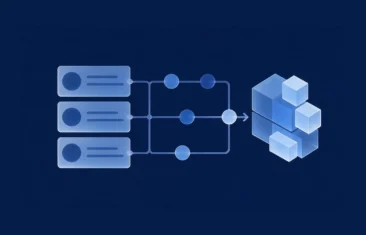
In practice, multi-agent LLM systems operate by breaking down complex tasks and orchestrating multiple agents through a coordinated workflow. When a high-level query or goal comes in, the system first decomposes it into smaller subtasks, each aligned with a specific agent’s strengths. An orchestration mechanism then assigns these subtasks to the appropriate units based on their roles or expertise.

Key Components of Multi-Agent LLMs
Multi-agent LLM architectures typically include several key components that enable their coordinated operation:
- Agent specialization: Each agent in the system is specialized for a particular role or task type. This specialization means an agent might be highly skilled in one domain (e.g. coding, translation, or logic reasoning) and focus solely on that aspect. By having multiple specialized agents, the overall system can handle a wider range of subtasks with expert-level proficiency. This modularity allows the team to leverage deep expertise in each component of a problem.
- Communication protocols: There must be defined protocols or languages for AI units to communicate their questions, responses, or results with one another. Agents often exchange information through natural language messages or structured data formats. Effective coordination requires that AI units understand each other’s outputs – for example, an analysis agent must convey its findings in a way that a summary agent can use. Designing robust communication channels (with agreed-upon formats and semantics) is critical so that the group of agents functions as a coherent unit rather than isolated silos. Clear communication prevents misunderstandings and ensures efficiency in multi-agent workflows.
- Orchestration layer: A central orchestration or controller component oversees the multi-agent process. This could be a designated “manager” unit or an external program module that routes tasks and information between agents. The orchestration layer is responsible for assigning subtasks to the right agents, sequencing or parallelizing their execution, and integrating their results.
- Task decomposition: Breaking the main problem into manageable subtasks is a fundamental step. Multi-agent systems typically include a mechanism (often part of the orchestrator or a planning agent) to perform task decomposition.
- Memory & context management: Each agent may maintain its own memory (short-term context of the current task and long-term knowledge) and there is often a shared memory or context store accessible by all agents. Memory management is vital so that agents remember prior interactions or important facts and remain consistent.
- Conflict resolution mechanisms: When multiple AI units work on related problems, they might produce conflicting outputs or proposals. Multi-agent architectures LLM therefore often include mechanisms to resolve disagreements or inconsistencies among AI units. This can involve consensus protocols, voting systems, or confidence scoring to decide which result to trust when agents diverge.
- API & tool integration: Multi-agent architecture LLM systems often extend beyond pure text generation by integrating external tools and APIs into their agents’ capabilities. Each AI unit can be equipped with specific tools – for example, a web browsing tool for a research unit, a calculator for a finance unit, or database access for a data-analysis unit.
- Dynamic role assignment: Advanced multi-agent setups support dynamic role or task assignment, meaning the system can adapt which AI units are involved or what roles they play as the situation evolves. Agents might not have fixed roles for every query – instead, roles can be reassigned or agents activated/deactivated on the fly based on the current needs.
- Feedback loops: Effective multi-agent architectures incorporate feedback loops for continuous improvement. This means agents (or an evaluation component) review the outcomes and feed results back into the system for refinement.
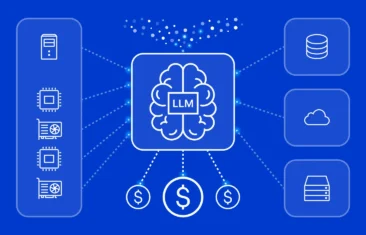
- Scalability infrastructure: To support many agents working together (potentially dozens or more), a robust infrastructure is required. This includes computational resources (powerful CPUs/GPUs and sufficient memory) and software frameworks that can manage parallel agent execution and communication without bottlenecks.
Leverage AI to transform your business with custom solutions from SaM Solutions’ expert developers.
Single-Agent vs. Multi-Agent LLMs: Key Differences
Single-agent LLMs are simpler and easier to manage, but they can falter on complex, specialized, or large-scale tasks. Multi-agent LLM systems introduce overhead in coordination, yet they unlock collaboration benefits: higher accuracy, broader capabilities through specialization, faster problem-solving, and greater robustness for challenging tasks.
Benefits of Multi-Agent LLM Architectures
Multi-agent LLM architectures offer several compelling benefits over single-agent systems, especially for enterprise and large-scale AI applications:
Enhanced task specialization
Having multiple AI units means each can focus on what it does best. This specialization leads to higher-quality results for each subtask. For example, instead of one general model trying to do everything, you might have a code-generation unit, a testing/verification unit, and a documentation unit each tackling the part of a software task they’re expert in.
Improved scalability
Multi-agent LLM systems are inherently more scalable. Need to tackle a bigger problem or more simultaneous user requests? Simply add more AI units or instances of units to divide the load. Because the architecture is modular, new units (or expanded roles) can be introduced without disrupting the entire system. This makes it easy for organizations to start small and grow their AI capabilities organically.
Faster problem-solving
Two (or more) heads are better than one – especially when they can work in parallel. Multi-agent LLMs can significantly speed up problem-solving because different AI units handle different parts of a task simultaneously. Instead of a single agent slogging through steps one by one, a team of units can address multiple facets at once.
Higher adaptability
Multi-agent LLM architectures tend to be more adaptive and robust in the face of changing requirements or unexpected scenarios. Because multiple agents are involved, the system can adjust which units are active or how they interact based on the situation. If a problem’s scope shifts or if new information comes to light, an orchestrator can redirect units or enlist additional ones on the fly (thanks to dynamic role assignment).
Redundancy and fault tolerance
An often overlooked benefit of multi-agent systems is their built-in redundancy and improved fault tolerance. With multiple units collaborating, the system does not have a single point of failure. If one agent encounters an error, produces a dubious result, or even crashes, other units (or the orchestrator) can detect the issue and either correct it or reroute the task. For example, one agent’s output can be cross-checked by another – if a discrepancy is found, the system can resolve it or try an alternative approach.
Popular Multi-Agent LLM Frameworks
As multi-agent LLM systems gain popularity, a number of frameworks and tools have emerged to help developers build these AI teams. Here are some of the notable frameworks enabling multi-agent LLM architectures:


Real-World Applications of Multi-Agent LLMs
Multi-agent LLM architectures are not just theoretical – they’re being applied to solve real-world problems across industries. Here we highlight a couple of prominent use cases that illustrate how collaboration between AI units can unlock advanced capabilities:
Autonomous research assistants
Imagine an AI that can conduct research as a team of analysts would. Multi-agent LLM systems are being used to create autonomous research assistants that can gather information, analyze data, and produce insights with minimal human intervention. In this scenario, different LLM agents take on distinct research roles.
AI-powered customer support teams
Customer support is a natural fit for multi-agent LLM architectures, effectively creating an AI-driven support team to improve service quality and speed. In a traditional support center, you have level-1 AI units for routine questions, specialists for complex issues, and supervisors for escalations. An AI-powered multi-agent system can emulate this structure.

Challenges and Limitations of Multi-Agent Systems
While multi-agent LLM architectures are powerful, they also introduce new challenges and limitations. It’s important to be aware of these potential pitfalls:
Coordination overhead
Coordinating multiple autonomous AI units is a non-trivial task – the complexity of managing interactions grows quickly with each added agent. Ensuring that units work harmoniously towards a common goal can be like conducting a symphony where each musician plays a different tune if not properly synchronized. The system needs robust communication and scheduling to prevent units from stepping on each other’s toes or leaving tasks unfinished because they assumed another agent would handle it.
Consistency management
With multiple AI units comes the challenge of maintaining a consistent and shared understanding of the task and data. Each agent might only see a piece of the puzzle, so inconsistency can arise if they don’t sync up contexts. For example, if one agent updates some intermediate result or fetches new information, other AI units need to be aware of this change; otherwise, one agent might be operating on outdated assumptions. Ensuring that all units have the relevant context (and that no agent is contradicting another) is tricky.
Security vulnerabilities
Multi-agent LLM systems expand the attack surface for security issues compared to single-agent systems. Each agent and their communication channels become potential points of exploitation. One notable concern is prompt injection attacks or malicious instructions: if an attacker can influence one agent (say by feeding it a corrupted input or prompt), that agent might generate harmful or misleading output that then propagates through the system to other AI units. In a multi-agent setup, a compromised agent could send a malicious prompt or data to its peers, causing a cascade of incorrect or damaging behavior.
Resource intensity
Running multiple large language model AI units can be resource-intensive. Each agent on its own might be a hefty model (some could be full-scale LLMs depending on the design), so multiple AI units mean multiplied computational load in terms of CPU/GPU usage and memory consumption. Even if smaller models are used for AI units, the overhead of their communication and orchestration can add latency and compute cost. In some cases, deploying a multi-agent architecture might require several high-end servers or cloud instances working in tandem, whereas a single-agent solution could potentially run on a smaller setup.


Future Trends in Multi-Agent AI
We can expect deployments involving not just a handful, but potentially swarms of specialized AI units working together. These could resemble entire AI departments handling complex projects. As frameworks and hardware improve, orchestrating dozens or hundreds of agents could become feasible, enabling AI to take on mega-scale problems (imagine an AI “company” of agents running a multifaceted operation). The concept of “agent swarms” or agentic AI ecosystems is gaining traction – where teams of autonomous agents coordinate to operate whole functions of a business or research lab.
Why Choose SaM Solutions for Multi-Agent LLM Development?
Implementing an advanced multi-agent LLM architecture in-house can be a daunting and expensive endeavor for companies. From acquiring the right hardware and ML expertise to managing ongoing maintenance, the costs and uncertainties (in terms of ROI) can be significant. SaM Solutions helps alleviate this by offering more affordable development and hosting options. We help clients choose the right architecture and frameworks (be it AutoGen, LangChain, etc.) that fit their needs. Importantly, we support open-source deployments whenever possible. That means we can implement your solution using open-source LLMs and frameworks, avoiding costly proprietary licenses and giving you more flexibility. SaM Solutions understands the paramount importance of data privacy and regulatory compliance. We design multi-agent LLM systems with security and confidentiality at the core.
Talk to our AI specialists about building smart, scalable software for your business.
Final Thought
As we move into this future of agentic AI, businesses that effectively leverage multi-agent architectures stand to gain a competitive edge through more powerful, resilient, and optimization-driven AI capabilities. With the right expertise and partnerships (for example, working with experienced developers like SaM Solutions), even the most ambitious multi-LLM architecture can be turned into a practical, value-driving reality marked by long-term persistence and adaptability. The era of single, monolithic AI is fading – the future belongs to networks of synthetic AI agents working together in coordinated systems, and that future is already unfolding today.
FAQ
Multi-agent LLM systems typically require robust hardware, because you may be running several large models concurrently. At minimum, a multi-agent setup benefits from high-end GPUs (or even multiple GPUs) if using neural network models for each agent. Many deployments use server-grade GPU machines or cloud GPU instances to provide the necessary parallel computing power. Ample RAM is also important, since each agent model and its context can consume a lot of memory. In addition, a fast interconnect or network is needed for the agents to communicate quickly if they’re distributed across machines