SAP Customer Experience (CX): Complete Guide


(If you prefer video content, please watch the concise video summary of this article below)
Key Facts
- SAP CX bridges the front office and back office, moving commerce, sales, service, engagement, and customer information closer to ERP, inventory, price, fulfillment, and financials.
- SAP Commerce Cloud handles complicated B2B, B2C, and B2B2C scenarios, thus making it quite pertinent for businesses that require a sophisticated digital commerce solution.
- AI is assuming more significance, which includes features like guided selling, product recommendation, service summary, personalization, and AI-powered engagements.
- This solution is an ideal fit for organizations led by SAP, in that it works perfectly with SAP S/4HANA and SAP Business Technology Platform.
- Its implementation requires proper data hygiene, planning, and change management, rather than being solely reliant on the technology itself.
SAP Customer Experience, usually shortened to SAP CX, has evolved from a classic front-office suite into a connected portfolio for ecommerce. For organizations asking “What is SAP Customer Experience?” the strategic idea is simple: it helps customer-facing teams move beyond isolated tools and work from a connected portfolio for commerce, sales, service, engagement, and customer data.
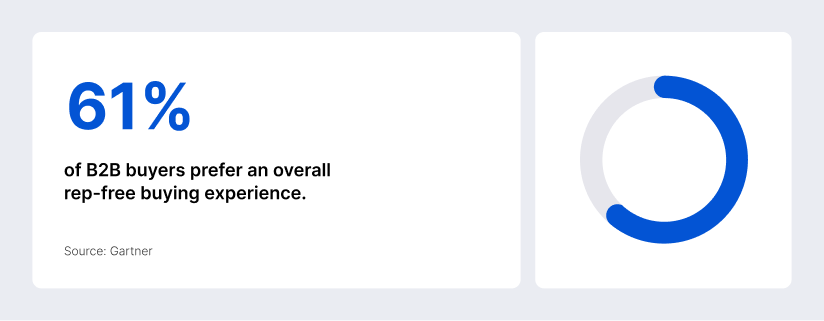
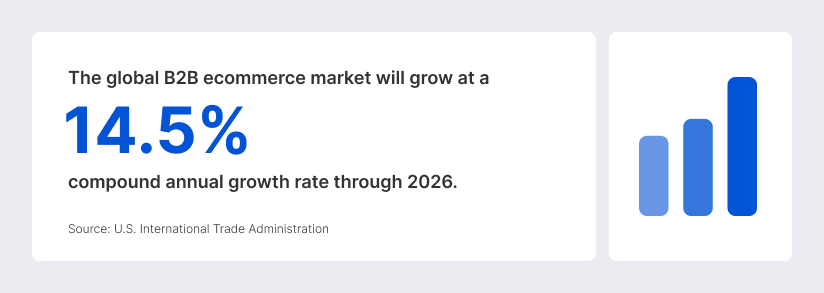
Customer expectations are still rising. In B2B, Gartner found that 61% of buyers prefer an overall rep-free buying experience, and the U.S. International Trade Administration reports that the global B2B ecommerce market will grow at a 14.5% compound annual growth rate through 2026.
This shift puts pressure on enterprises to deliver digital buying experiences that are not only intuitive for customers but also deeply connected to pricing, inventory, fulfillment, and service operations. For enterprises already running ERP or moving to SAP S/4HANA, SAP customer experience solutions are especially compelling because they are designed to connect front-office interactions with back-office execution.
With SaM Solutions’ SAP Commerce Cloud team, you get a robust ecommerce system and deliver personalized omnichannel experiences that increase your customer loyalty.
What Is SAP Customer Experience
So, what is SAP CX? SAP Customer Experience is SAP’s portfolio of customer-facing applications for commerce, sales, service, engagement, and customer data. It helps companies acquire, convert, serve, and retain customers using applications that are more tightly connected to ERP and operational processes than many standalone front-office platforms.
Evolution of SAP CX Ecosystem
SAP customer experience services did not appear overnight. The current ecosystem is the result of several strategic portfolio moves. First, in 2018, SAP released C/4HANA that included various front-office modules such as Commerce Cloud, Sales Cloud, Service Cloud, Marketing Cloud, and Customer Data Cloud along with the existing S/4HANA. Second, Hybris was renamed to SAP Commerce Cloud in 2018. Third, in 2020, SAP launched Emarsys. Lastly, Emarsys became SAP Engagement Cloud in 2026.
Why Customer Experience Matters in Digital Commerce
Customer experience is now a commercial performance issue, not just a brand concern, because poor digital journeys can directly reduce conversion. Omnichannel behavior is mainstream, and clients may abandon purchases when their preferred channel is unavailable. This makes platform strategy critical. When buyers are unable to check price, availability, delivery options, order updates, or transaction history via any available channel, the company has to deal with unnecessary troubles.
Core Components of SAP Customer Experience Suite
SAP CX is best understood as a portfolio of specialized applications that solve different moments in the customer lifecycle while sharing data and processes across a broader business architecture.
Commerce Cloud is an advanced cloud-based ecommerce solution that integrates business data and commerce features out of the box on a single platform. Its key features are ERP integrations, composable storefronts, natural language search, promotions & payments, catalog management, and AI-driven personalization.
SAP Sales Cloud is SAP’s CRM and sales execution layer. SAP positions it for sales automation, customer acquisition, guided selling, forecasting, analytics, pipeline intelligence, and mobile selling. The strategic path Sales Cloud is currently taking clearly indicates its move towards AI-powered services, including Joule-powered assistance and forecast management.
The capabilities provided by Service Cloud include client service, case management, omnichannel service, and connected service operations. Some of the unique features of the solution include an agent workspace, AI summary recommendations, ticket categorization, and sentiment analysis.
Historically, Marketing Cloud was one of the first C/4HANA pillars. In the present-day product portfolio, the engagement and marketing layer from SAP includes SAP Engagement Cloud, previously known as Emarsys. It is an intelligent, real-time personalization and omnichannel orchestration platform for web, emails, mobile applications, and advertising.
SAP Customer Data Cloud allows for consent statements, withdrawal of consent, consent management records, downstream integration, and regulatory compliance with laws such as GDPR, CCPA/CPRA, and LGPD. Within the data stack, Customer Data Platform adds to the consent and identity framework.
Key Features of SAP CX
These key features are most valuable when they work together, connecting commerce, sales, service, personalization, analytics, and customer data with real business operations.
SAP’s Commerce Cloud is designed to provide omnichannel execution capabilities in B2B, B2C, and B2B2C business models. The main benefits of SAP’s solution include consistency in terms of price, availability, account details, and service regardless of the channel through which buyers purchase.
Personalization can be found everywhere within commerce and engagement. Engagement Cloud provides interaction management in real-time through multiple channels, whereas Customer Data Platform assists in revealing customer insights for the organization as a whole.
There are multiple ways by which the platform uses AI to provide recommendations. Some of the AI capabilities include personalized recommendations, advanced search and discovery, intelligent customer support services, and conversational shopping support.
Unified profiles play an important part in the customer data approach by SAP. They are especially beneficial for the unification of relationship information across the individual and business customer levels.
Sales Cloud is comprised of dynamic analytics, forecasting management, business intelligence, and pipeline analysis, while Service Cloud provides managers with visibility into ticket status. The engagement platform comprises AI-enabled reporting along with the built-in functionality of Analytics Cloud.
The ability to automate sales is one of the most distinct advantages offered by SAP Sales Cloud. This is because SAP specifically emphasizes the use of guided selling, next-best action, digital sales workspace, pipeline insights, and artificial intelligence-based forecasting by its products.
SAP Service Cloud streamlines service processes by integrating workspaces, advanced automation, cross-department case management, consistent interactions across channels, and service execution through S/4HANA.
SAP defines Commerce Cloud, Service Cloud, and Engagement Cloud as scalable native cloud platforms. Commerce Cloud provides API-first and composable options, and Engagement Cloud highlights API-first governance across multiple brands and regions.
Benefits of SAP Customer Experience
This solution helps businesses improve retention, sales, data visibility, efficiency, and omnichannel consistency by connecting customer interactions with real operational processes.


SAP CX and SAP S/4HANA Integration
Thanks to the integration of SAP CX and SAP S/4HANA, you can enhance commerce, sales, and services with ERP capabilities, thereby enabling product, order, price, inventory, and fulfillment data to be transferred between systems. Orders can be entered through Commerce Cloud into ERP, service agents can obtain their operating context from Service Cloud, and sales processes can connect to the fulfillment process and lead-to-cash cycle through Sales Cloud.
Artificial Intelligence in SAP CX
The platform incorporates AI technology throughout its modules for more accurate forecasting, product recommendations, client support, personalization, and marketing.
In Sales Cloud, the use of AI helps improve forecasting, pipeline management, and opportunities. In addition, Customer Data Platform incorporates AI to provide better insights and segmentation.
In Commerce Cloud, AI technology facilitates product recommendation, discovery, and assistance services. To configure advanced options, you can use Intelligent Product Recommendation.
With Service Cloud, AI helps in case summarization, proposing next steps, issue categorization, and analyzing customer sentiments. You can use it for order and issue resolution in self-service scenarios.
AI-powered marketing automation software is designed to help with segmentation, scheduling, creative development, personalization, and analytics. The objective here is to provide automation of relevance via multiple channels.
SAP CX for B2B and B2C Commerce
SAP CX can deliver B2B as well as B2C functionality at an advanced level. It will suit companies that are looking for self-service functions, sophisticated pricing, account hierarchies, guided selling, and order management integration with ERP. It would be especially beneficial for organizations that require personalization, loyalty management, omnichannel interactions, real-time segmentation, and shopper context.
Industry Use Cases of SAP CX
SAP CX offers industry-specific solutions by linking customers’ experiences with operational systems, allowing companies to offer a tailored and effective approach for each specific industry.
The retail sector uses the platform to enable dealer networks, self-service portals, advanced B2B order processing, and customer engagement connected to the ERP system.
The manufacturing sector uses the platform to enable dealer networks, self-service portals, advanced B2B order processing, and customer engagement connected to the ERP system.
In the automotive industry, the system facilitates connected customer experiences throughout all processes related to sales, after-sales services, dealerships, and customer engagement.
Healthcare institutions use SAP CX to optimize patient engagement, coordinated services, digital communications, and personalized experiences.
Companies from the telecommunications sector leverage this solution to streamline customer acquisition and retention through omnichannel customer management and subscription services.
SAP CX Implementation Strategy
The platform implementation should consider scope, architecture, data, customization, testing, and optimization as connected streams rather than independent project activities.


Common Challenges in SAP CX Projects
The projects often face challenges around integration, data quality, customization, and adoption.


SAP CX vs Salesforce Commerce Cloud
SAP CX is stronger for SAP-connected commerce and operations, while Salesforce Commerce Cloud is stronger for businesses already using the Salesforce ecosystem.
| Area | SAP CX | Salesforce Commerce Cloud |
|---|---|---|
| Platform scope | Commerce, sales, service, engagement, and customer data. | Commerce-led CX connected to Salesforce apps. |
| Commerce coverage | Supports B2B, B2C, and B2B2C on one platform. | Supports commerce, POS, and order management. |
| Integration | Strong fit for SAP and S/4HANA environments. | Integrates through APIs, Customer 360, and Data 360. |
| Customer data | Combines customer and account data. | Builds a real-time Customer 360 view. |
| Sales & service | Works with Sales Cloud and Service Cloud. | Works with Salesforce Sales Cloud and Service Cloud. |
| AI | Uses Joule, Commerce AI, guided selling, and CX AI tools. | Uses Agentforce and AI across commerce, sales, and service. |
| Best fit | Companies needing close ERP and commerce alignment. | Companies that already invested in Salesforce CRM. |
SAP CX vs Adobe Experience Cloud
SAP CX is stronger for ERP-connected commerce and operations, while Adobe Experience Cloud is stronger for personalization, journey orchestration, and analytics.
| Area | SAP CX | Adobe Experience Cloud |
|---|---|---|
| Platform scope | Commerce, sales, service, engagement, and customer data. | Experience suite covering data, journeys, analytics, and commerce. |
| Core strength | Connects CX with business operations. | Orchestrates digital experiences and personalization. |
| Commerce | Strong B2B, B2C, and B2B2C with ERP-connected pricing and inventory. | Enterprise B2B/B2C commerce with AI and composable capabilities. |
| Customer data | Unifies customer and account data with governed activation. | Builds real-time profiles from multiple data sources. |
| Journeys & analytics | Supports engagement, marketing, and operational analytics. | Strong real-time journeys and cross-channel analytics. |
| CRM | Includes Sales Cloud and Service Cloud. | Not a full native sales-and-service CRM suite. |
| Best fit | ERP-driven organizations that need operational alignment. | Brands focused on content, personalization, journeys, and analytics. |
Future of SAP Customer Experience
The platform’s future is all about embedded AI, unified data, and closer integration between front-office and back-office capabilities. Intelligent capabilities are being embedded within quotes, product information, marketing campaigns, and services. This is all about augmenting human capability through better intelligence with data, orchestration, and role design.
SAP Customer Experience Services from SaM Solutions
SaM Solutions is a certified SAP Silver Partner with advanced commerce competency and a dedicated SAP Commerce Cloud development center. Since 2013, we have delivered 40+ go-live projects with 80+ SAP Commerce Cloud experts, including 30+ certified specialists.
Our services cover technical consulting, audits, migration, development, customization, integrations, upgrades, QA, performance optimization, and long-term maintenance. We are especially relevant for medium-sized companies and large enterprises that need scalable solutions connected to existing cloud, hybrid, or on-premises IT landscapes.
Enhance your digital commerce outcomes by building a seamless customer experience ecosystem with SaM Solutions’ SAP Commerce Cloud team.
Conclusion
SAP Customer Experience will thrive in the cases where customer journey requires up-to-date data on all the business processes involved. Its strength is the link between commerce, sales, service, engagement, identity, and customer data with ERP, pricing, orders, logistics, and service management. As a result, it can be considered a good choice for complicated B2B businesses, omnichannel retail, B2B2C operations, and any SAP-driven enterprises.
FAQ